Mar Nostro
2026, Marseilles, France
In collaboration with UV LAB
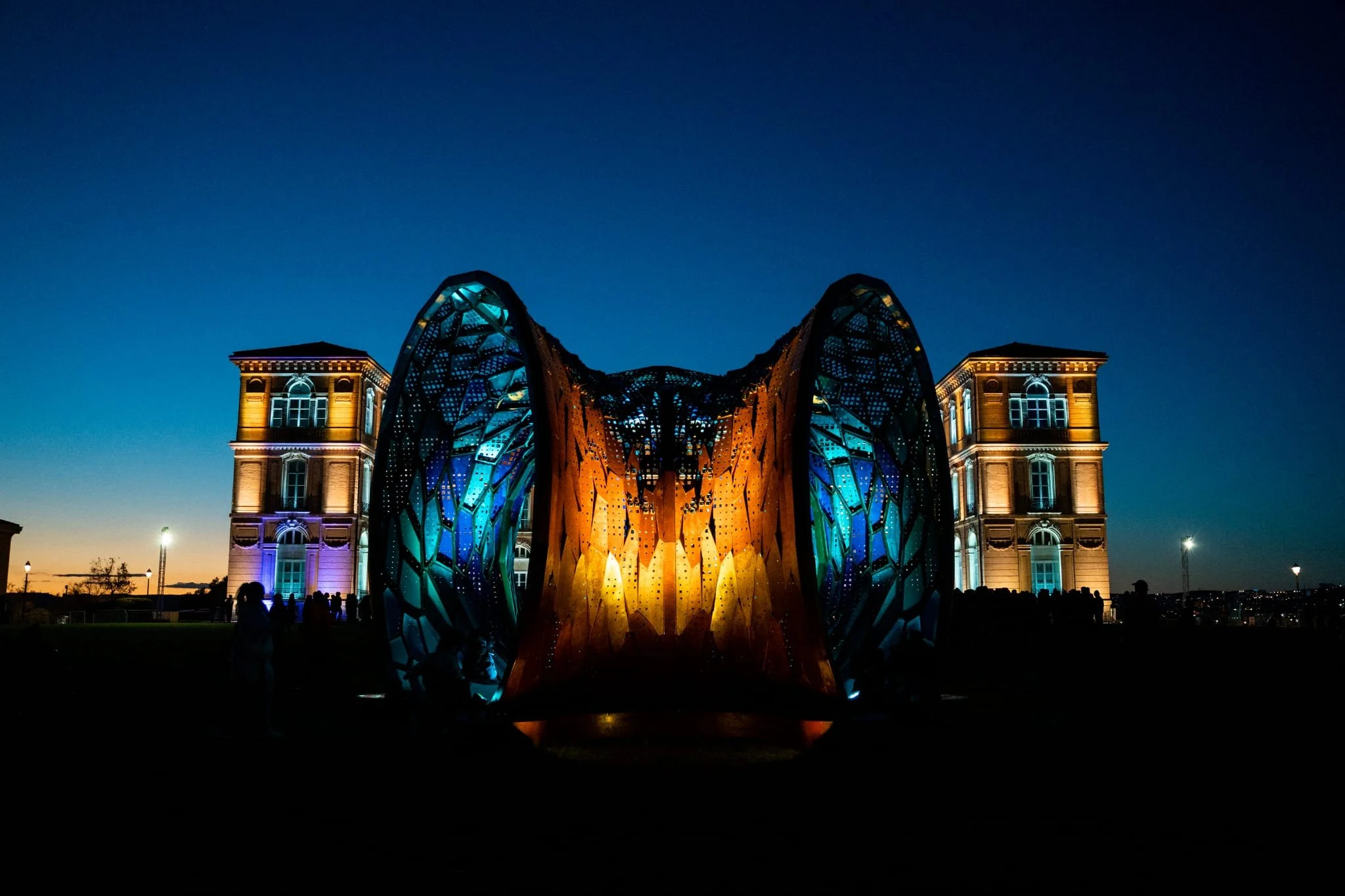
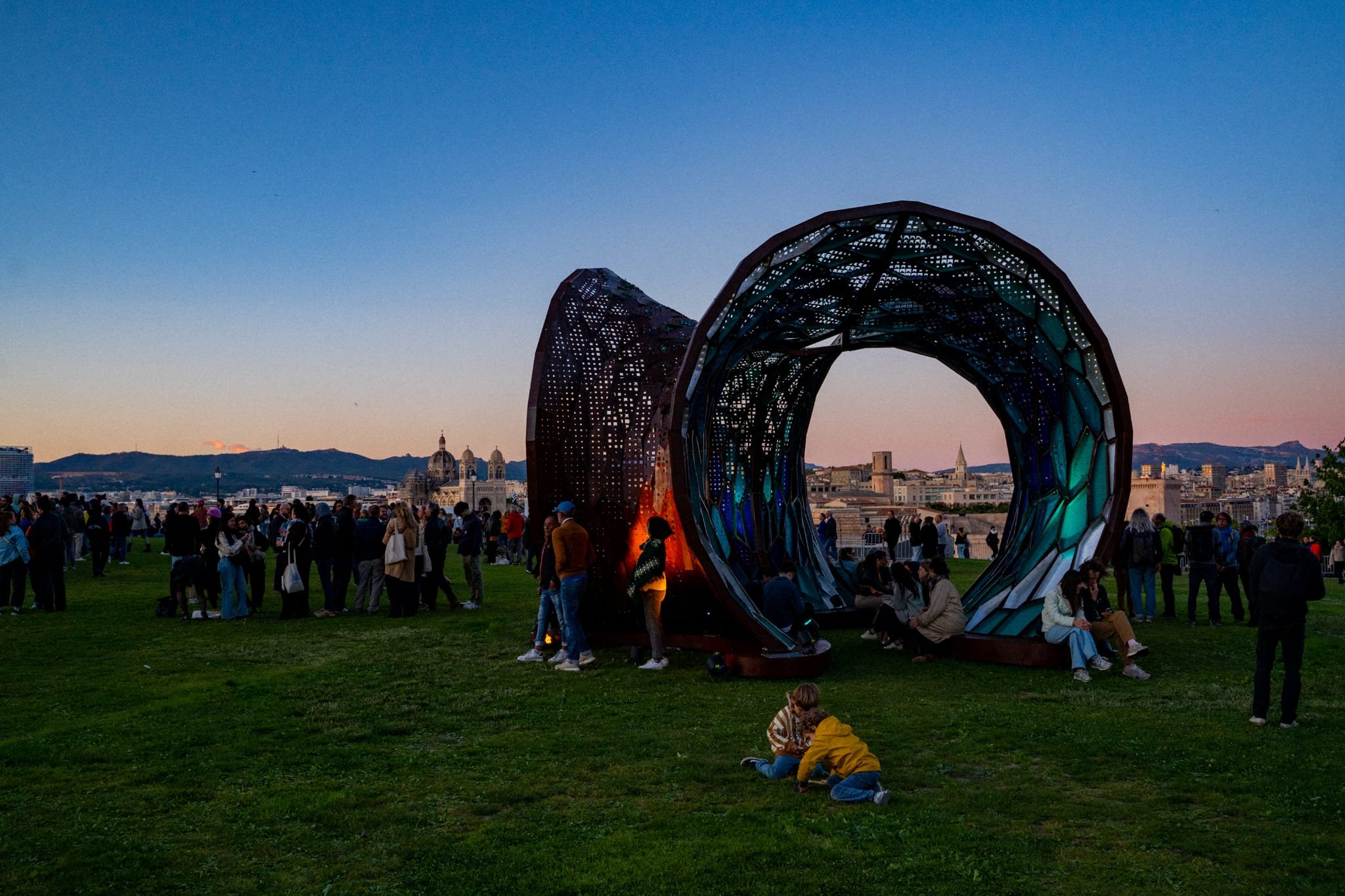
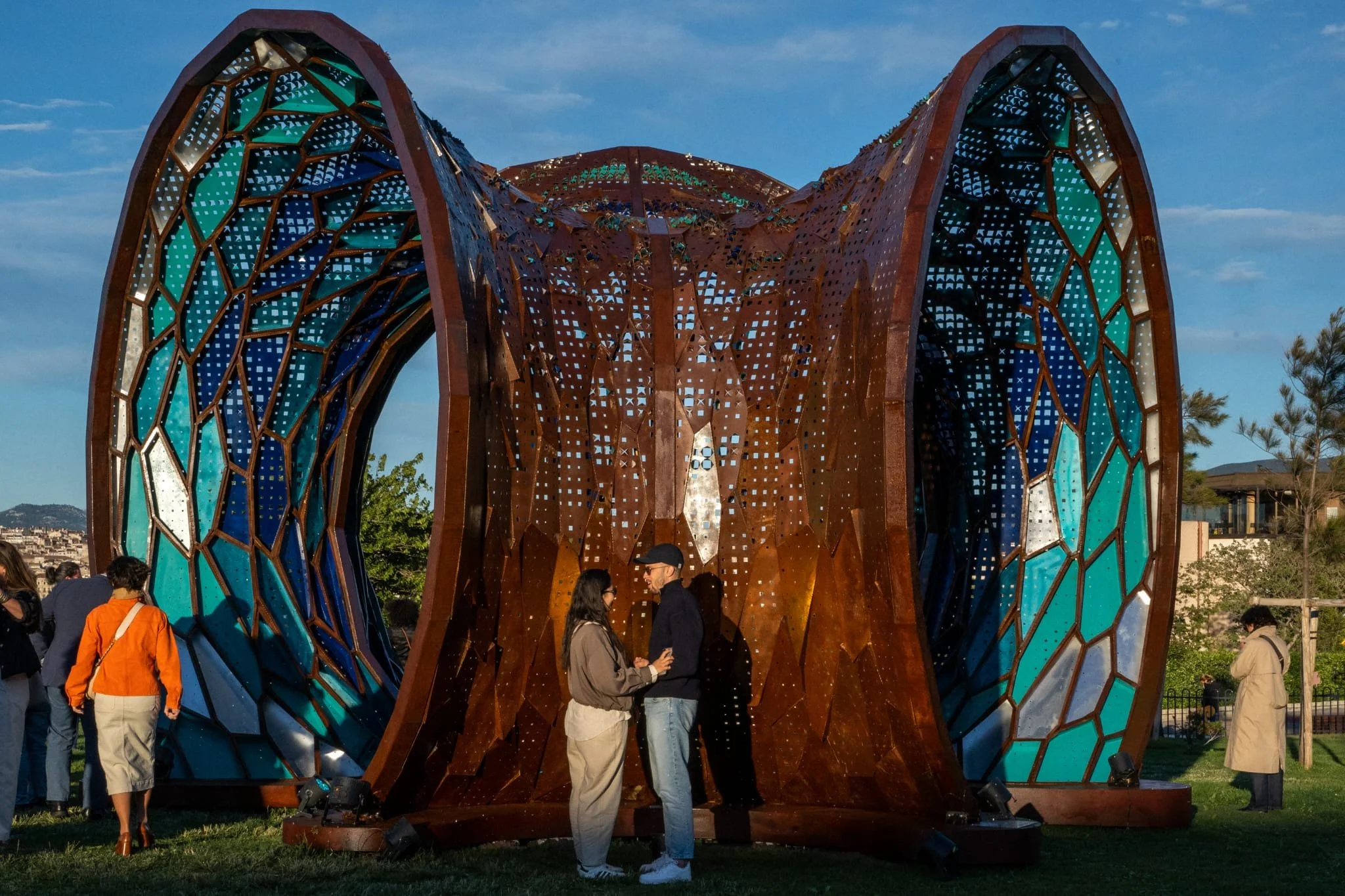
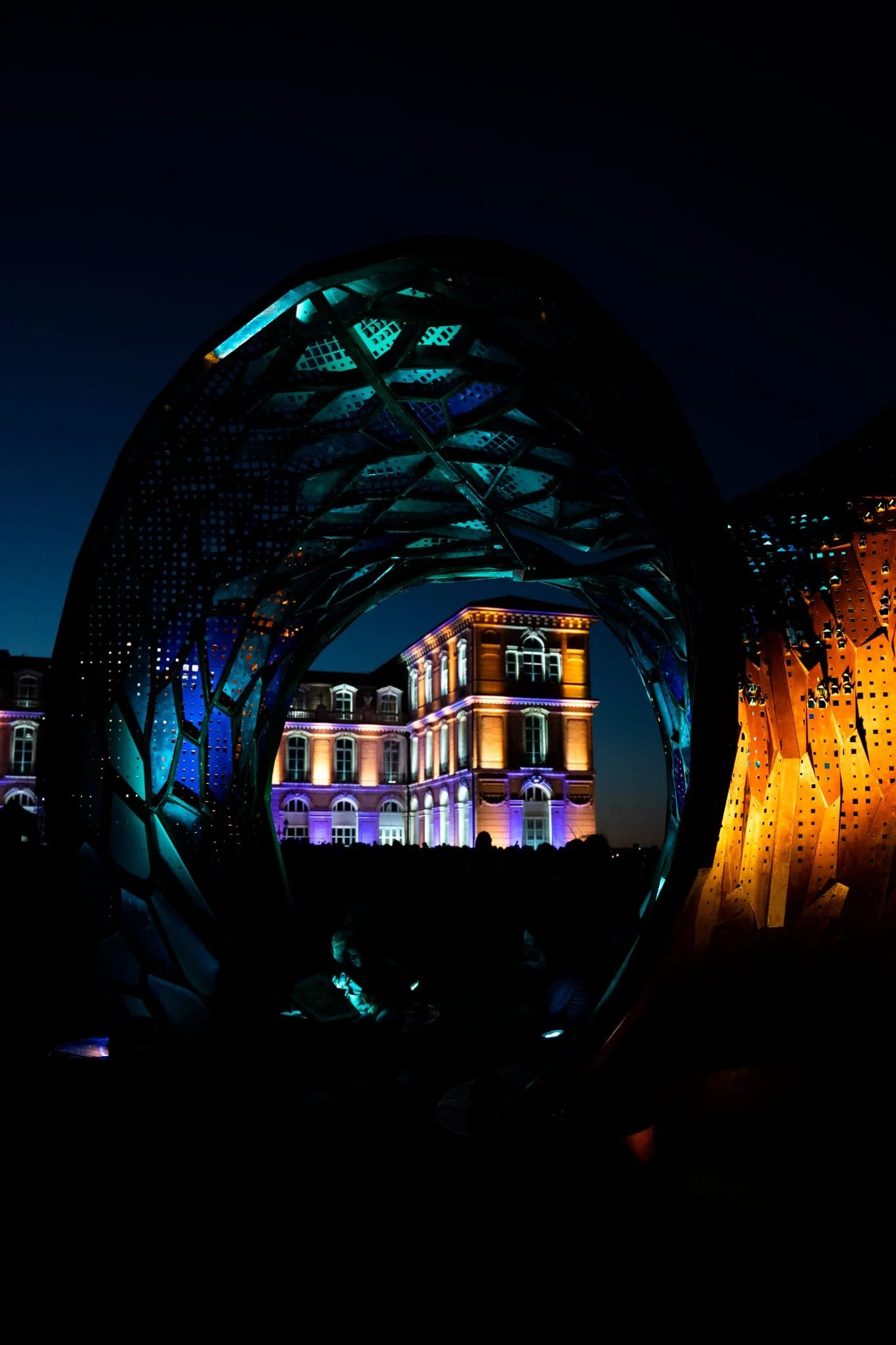
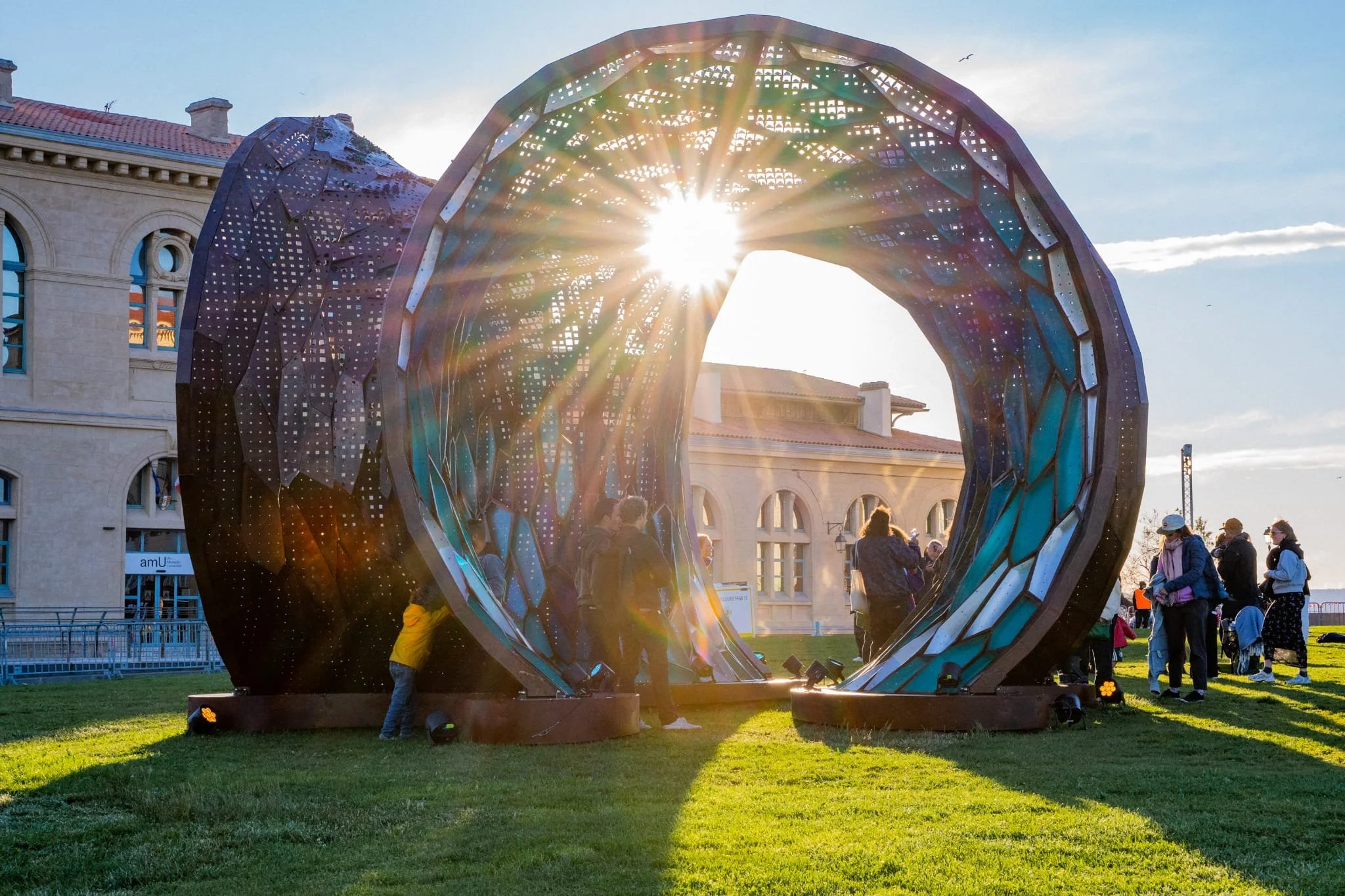
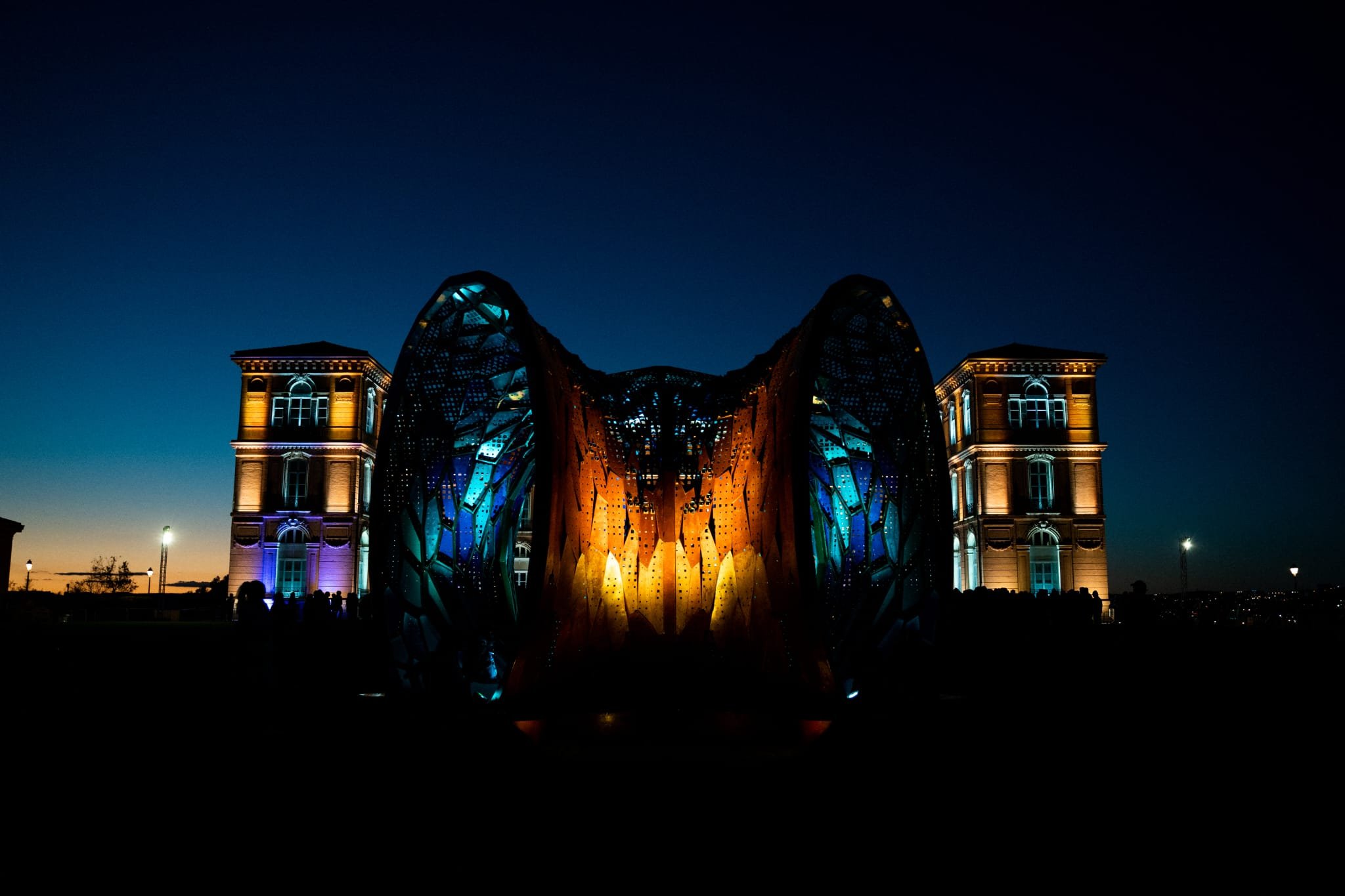
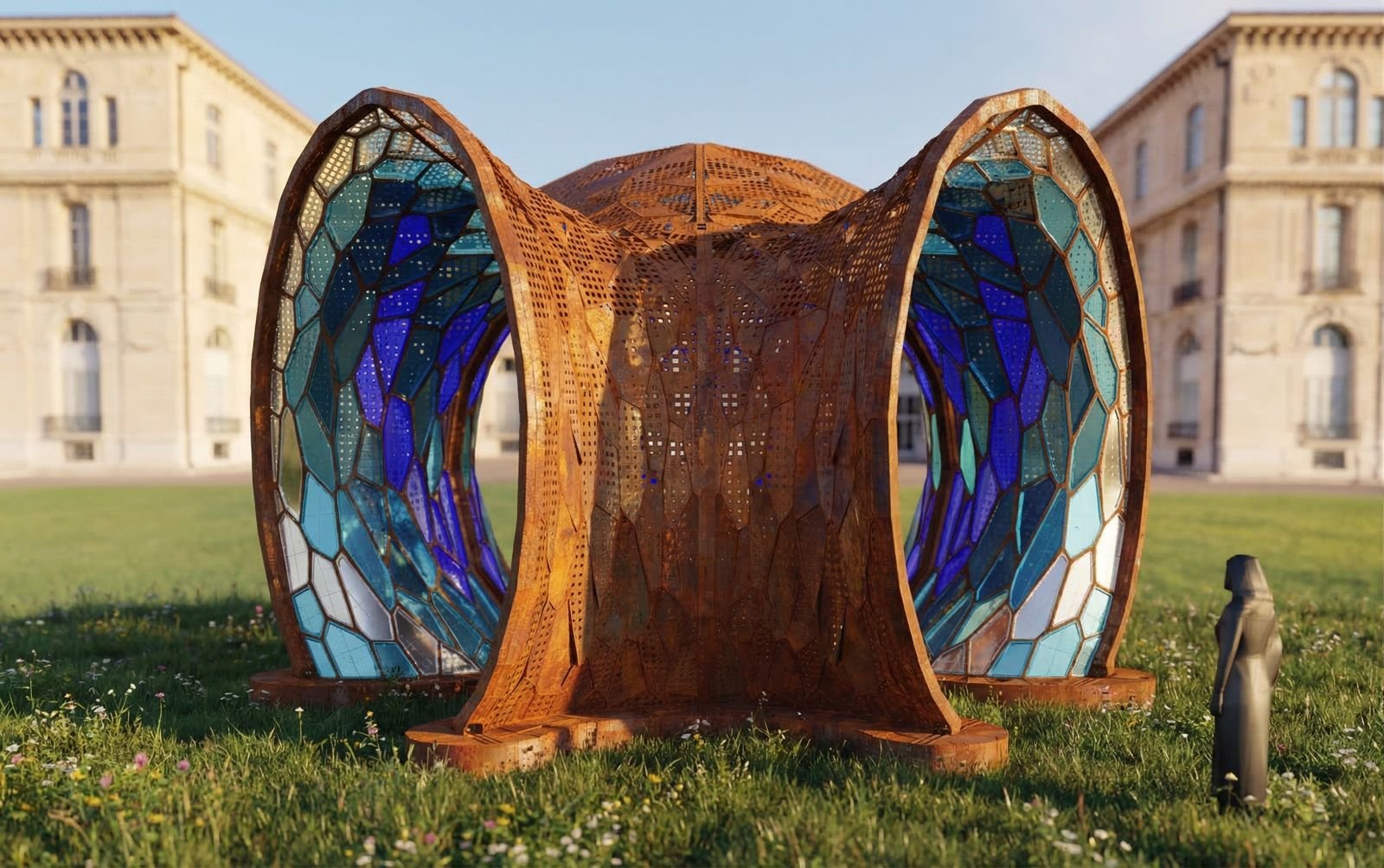
"Mar Nostro – Notre Mer – بحرنا is a large-scale outdoor pavilion installation by Michael DiCarlo (Saas) and UV LAB, a transdisciplinary design and architecture collective based at the Cité des arts de la rue in Marseille. Unveiled on May 15, 2026, at the Jardin du Palais du Pharo in Marseille, the work serves as a centerpiece of the Saison Méditerranée 2026 — a major French state cultural initiative — and remains on view through October 18, 2026, in free public access. The title reclaims the Latin expression Mare Nostrum — historically used to assert dominion over the Mediterranean — and transforms it into a living question: our sea, but whose ""we""? The pavilion is open at both ends and structurally oriented toward the three continental shores of the Mediterranean basin: Africa, Asia, and Europe. From a distance, the structure reads as a shell, a ruin, a sail, or a constellation. Up close, 486 individually hand-folded, laser-cut weathering steel panels create a shifting surface of light, shadow, and color that changes with every step the viewer takes. At night, light filters through the perforations to form moving constellations — recalling the stars that once guided voyagers, sailors, and exiles across this sea.
Process
The design emerged from the team's research into Mediterranean visual culture and the Lingua Franca — the hybrid contact language historically spoken across the ports of the sea. The structural geometry translates this cultural hybridity into a parametric pattern that unifies references from across three continents into a single repeating motif, shifting between full and void, relief and flatness, as light and viewing angle change. The pavilion is composed of 486 laser-cut weathering steel (Corten) panels, each individually hand-folded over several weeks of production. This labor-intensive process was carried out in collaboration with the Cascadeurs et Cascadeuses — workers from the insertion workforce program at the Cité des arts de la rue — embedding community participation directly into the fabrication process. The structure was assembled on-site at the Jardin du Pharo and is engineered to weather and patinate over its five-month public installation, its material surface evolving in dialogue with the sea air of Marseille.
Additional Information
Produced within the framework of the Saison Méditerranée 2026, a major French state cultural season focused on Mediterranean exchange. Co-produced by the Ville de Marseille, the Institut français, and Lieux Publics — Centre national des arts de la rue et de l'espace public. Photography by Pierre Gondard, Marina Perillat, and Ismael Bazri. Video documentation by Aras Omar."